
Google AI Overviews vs SEO: What Website Owners Should Know
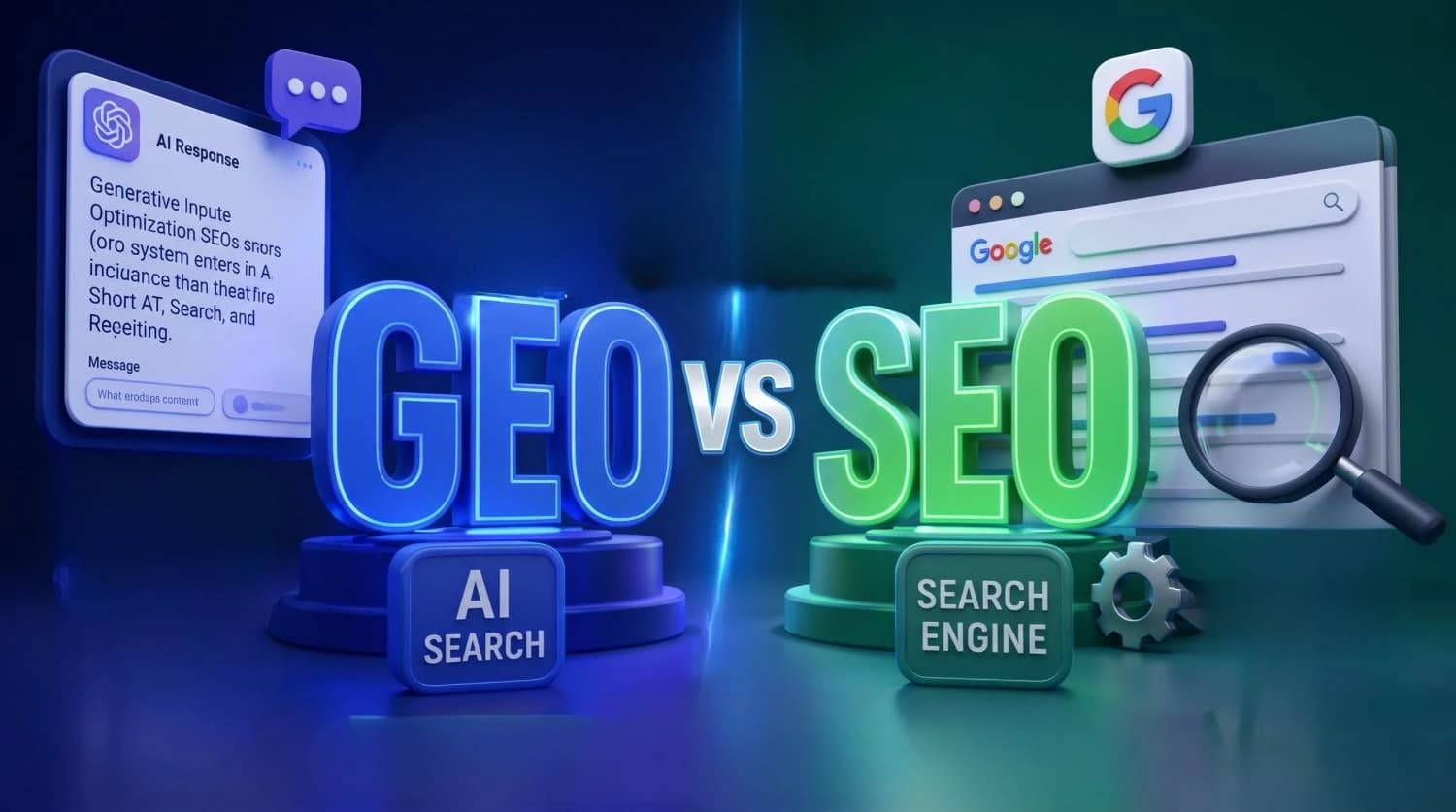
Google Search is changing how people discover information online. Instead of displaying only a list of website links, Google increasingly uses artificial intelligence to generate summaries that answer users' questions directly within search results.
This experience is known as Google AI Overviews.
For website owners, bloggers, publishers, and digital marketers, this development introduces an important question: if Google can answer a user's question directly, why would someone still visit a website?
Traditional SEO strategies focus on improving search rankings, attracting organic clicks, and increasing website traffic. AI-powered search introduces another layer of visibility, where websites may be referenced as sources within generated answers.
However, this does not mean traditional SEO is becoming irrelevant. Google continues to rely on its core Search systems and established quality signals to support its AI-powered search experiences.
Understanding the relationship between Google AI Overviews and SEO is essential for developing a sustainable search strategy in 2026.
Google AI Overviews are AI-generated summaries that appear within Google Search results for selected queries. They provide users with an overview of a topic by combining information from relevant online sources.
Instead of requiring users to open several websites to understand a complicated subject, AI Overviews can present a consolidated explanation with links to supporting webpages.
For example, someone searching for "How can I improve my website's Core Web Vitals?" may see an AI-generated explanation covering loading performance, interaction responsiveness, and visual stability.
The overview may also provide links to relevant websites where users can explore the subject in greater detail.
Google does not display AI Overviews for every search. Its systems determine when an AI-generated response is useful in addition to conventional search results.
Search Engine Optimization (SEO) refers to the process of improving a website's visibility in organic search results.
Traditional SEO focuses on helping search engines discover, understand, index, and rank webpages according to their relevance and usefulness.
Its major components include:
Technical SEO: Improving crawling, indexing, website speed, mobile usability, and technical accessibility.
On-Page SEO: Optimising titles, headings, descriptions, URLs, images, and content.
Off-Page SEO: Building authority through relevant backlinks, brand recognition, and credible references.
Content SEO: Publishing useful, original, and search-intent-focused information.
User Experience: Making websites accessible, easy to navigate, and useful across devices.
Although both experiences operate within Google Search, they serve users differently.
Comparison | Traditional SEO | Google AI Overviews |
Main purpose | Rank relevant webpages | Generate AI-powered summaries |
Search experience | Website listings | AI-generated answers with supporting links |
Content discovery | Search ranking systems | AI-supported retrieval and synthesis |
User interaction | Users select search results | Users can explore summaries and source links |
Main opportunity | Organic website clicks | Visibility as a supporting source |
Content approach | Helpful, relevant content | Helpful content with clear, reliable information |
The most important distinction is that traditional SEO aims to improve webpage visibility in search results, while AI Overviews can present information from multiple sources within a generated response.
These approaches are connected rather than completely separate.
The growing presence of AI-generated answers changes how users interact with search results.
1. Changes in Organic Click-Through Rates
When users find sufficient information in an AI Overview, they may not need to visit another website immediately. This can reduce clicks for certain informational searches.
However, users looking for detailed tutorials, product comparisons, original research, and practical solutions may still visit the websites referenced in the overview.
2. New Opportunities for Website Visibility
AI Overviews can introduce websites to users who might otherwise select a different search result.
Being referenced as a supporting source can increase brand exposure and create opportunities to attract relevant visitors.
3. Greater Importance of Content Quality
Publishing large quantities of repetitive articles is unlikely to create a sustainable advantage. Websites need original insights, accurate explanations, practical experience, and trustworthy information.
Google's guidance specifically recommends creating valuable, non-commodity content rather than simply reproducing information already available online.
Website owners should adapt their existing SEO strategies rather than abandon them.
1. Create Helpful, Experience-Based Content
Develop articles that answer genuine user questions while providing information that competitors do not offer.
Include practical explanations, original research, expert opinions, implementation steps, and relevant examples.
For instance, instead of publishing another generic article about website speed, explain how specific JavaScript optimisation techniques affect Interaction to Next Paint (INP).
2. Structure Content With Clear Headings
A logical content structure helps visitors understand information and navigate articles.
Use descriptive H2 and H3 headings, concise paragraphs, relevant lists, and tables where they genuinely improve readability.
Start important sections with direct explanations before providing deeper technical details.
3. Strengthen E-E-A-T Signals
Experience, Expertise, Authoritativeness, and Trustworthiness are important concepts within Google's Search quality guidance.
Website owners can strengthen credibility by:
Displaying accurate author information and professional biographies.
Linking to reliable research and official documentation.
Providing original insights and first-hand experience.
Updating outdated information.
Maintaining transparent editorial standards.
4. Improve Technical SEO
A website must be accessible to Google's systems to be considered for search visibility.
Review these technical elements:
Ensure important pages can be crawled and indexed.
Submit an updated XML sitemap.
Use internal links to connect relevant articles.
Optimise mobile usability and Core Web Vitals.
Avoid accidentally blocking important resources.
Implement structured data where appropriate and ensure it matches visible content.
Google confirms that existing technical SEO fundamentals remain relevant for its generative AI search experiences.
5. Use Images and Videos Strategically
Visual content can make technical explanations easier to understand.
Add relevant screenshots, diagrams, tutorials, and explanatory videos. Use descriptive filenames and meaningful ALT text for accessibility and image search visibility.
Avoid adding unrelated stock images simply to increase the number of visuals on a page.
6. Build Topic Authority
Instead of publishing disconnected articles, develop interconnected content around important subject areas.
For example, a website covering digital marketing could build a topic cluster around:
Technical SEO fundamentals.
Google AI Overviews and AI search.
Keyword research strategies.
Content optimisation.
Search Console reporting.
Organic traffic analysis.
Use relevant internal links to connect these resources and help readers explore related topics.
Google's official guidance makes an important distinction: there is no separate set of mandatory SEO techniques specifically for AI Overviews.
A website does not need special AI-specific files, unnecessary content chunking, or dedicated schema markup to qualify for these experiences.
Google also explains that its generative AI search features use information retrieved through its Search systems, including techniques such as retrieval-augmented generation (RAG) and query fan-out.
An important development is the Search generative AI control in Google Search Console. Rolled out worldwide by August 31, 2026, this setting allows website owners to manage whether their content and links can appear in supported generative AI search experiences.
For publishers, this makes understanding Search Console settings and visibility reporting increasingly important.
Traditional SEO reporting should continue, but website owners should evaluate more than keyword positions.
Monitor the following metrics:
Metric | What It Measures |
Organic clicks | Visitors arriving through search results |
Impressions | How frequently pages appear in search |
CTR | Percentage of impressions generating clicks |
Average position | Overall ranking visibility |
Conversions | Leads, registrations, and sales |
AI search visibility | Exposure through generative AI search features |
Google Search Console provides a Generative AI performance report for measuring visibility in supported generative AI experiences.
Compare changes in impressions, clicks, conversions, and landing-page performance over time. Avoid assuming that every traffic fluctuation is caused by AI Overviews alone.
Prioritise original, research-backed content over repetitive keyword-focused articles.
Target search intent instead of inserting keywords unnaturally.
Create detailed topic clusters with relevant internal links.
Keep technical documentation, statistics, and examples updated.
Monitor Google Search Console to identify changes in search visibility.
Optimise content for readers rather than trying to manipulate AI-generated answers.
1. Abandoning Traditional SEO: AI search does not eliminate the need for technical SEO, quality content, or website authority.
2. Publishing AI-Generated Content Without Review: Unverified information and repetitive articles can weaken content quality.
3. Overusing Keywords: Natural language and meaningful topic coverage matter more than keyword repetition.
4. Ignoring Website Performance: Poor mobile usability and technical accessibility can damage the experience of visitors who reach your website.
5. Following Unverified GEO Hacks: Avoid paying for services promising guaranteed AI Overview placements or relying on unsupported optimisation techniques.
The future of SEO is not about choosing between traditional rankings and AI search. It is about building a website that remains useful, discoverable, and credible across both experiences.
1. What is the difference between Google AI Overviews and traditional SEO?
Traditional SEO focuses on improving website visibility and rankings in organic search results. Google AI Overviews generate AI-powered summaries that provide information from relevant sources and link to supporting websites.
2. Do Google AI Overviews affect organic website traffic?
Yes. AI-generated summaries can influence user click behaviour, particularly for informational searches. However, they can also create additional visibility and referral opportunities for websites included as supporting sources.
3. How can my website appear in Google AI Overviews?
Ensure your pages are indexed and eligible for Google Search, create helpful and original content, maintain technical SEO, and provide clear information that satisfies user intent. Inclusion is not guaranteed.
4. Is traditional SEO still important in 2026?
Yes. Google confirms that traditional SEO fundamentals remain relevant to AI-powered search. Technical accessibility, quality content, internal linking, and website usability continue to matter.
5. What is GEO, and how is it different from SEO?
Google AI Overviews are changing how information is presented and discovered through search engines. Although AI-generated summaries may influence organic click behaviour, they also create additional opportunities for websites to gain visibility through supporting links and relevant content.
For website owners, the most effective approach is to combine traditional SEO fundamentals with original, trustworthy, and experience-driven publishing.
Focus on technical accessibility, content quality, topic authority, and meaningful user experiences. Monitor performance through Google Search Console and adapt your strategy using real data rather than unverified AI optimisation shortcuts.
Written by
Alaffiya Madarwala
Last updated
19 November 2026
