How to Become a Full Stack Developer in 2026: Complete Roadmap for Beginners
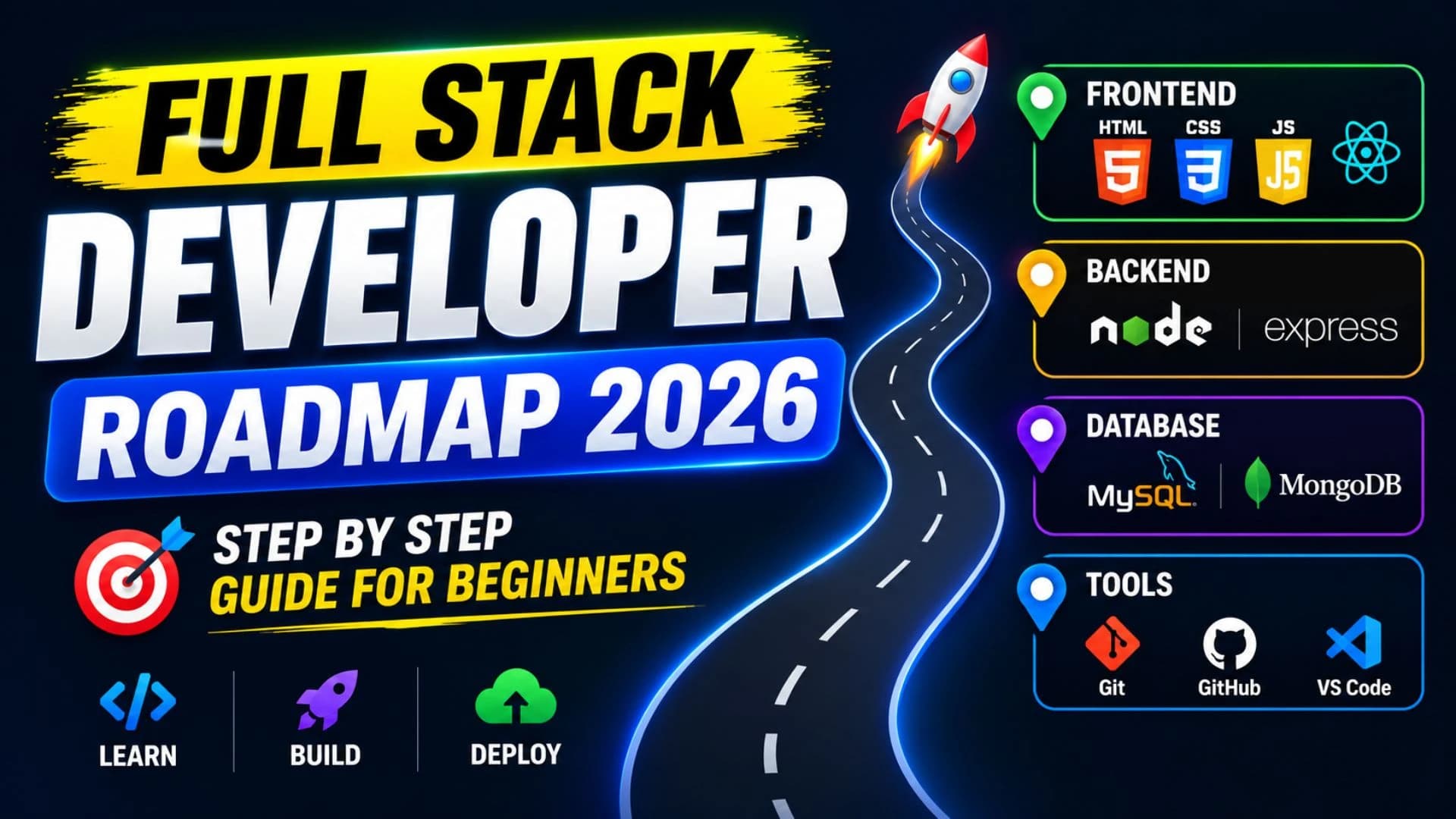
How to Become a Full Stack Developer in 2026: Complete Roadmap for Beginners
The demand for Full Stack Developers continues to grow as companies look for professionals who can build complete web applications from frontend to backend. Whether you're a student, career switcher, or aspiring software engineer, becoming a Full Stack Developer is one of the best career choices in 2026.
A Full Stack Developer works on both the user interface (frontend) and the server-side logic (backend), making them versatile and highly valuable in the tech industry.
In this guide, you'll learn the step-by-step roadmap, essential skills, tools, and technologies needed to become a successful Full Stack Developer.
Step 1: Learn HTML, CSS, and JavaScript
Start by mastering the building blocks of web development:
HTML5 for webpage structure
CSS3 for styling and responsive design
JavaScript (ES6+) for interactivity
These technologies form the foundation of every modern website.
Step 2: Master Frontend Development
Once you're comfortable with the basics, learn a modern JavaScript framework.
Recommended skills:
React.js
Next.js
Tailwind CSS
TypeScript
Responsive Web Design
These tools help you build fast, modern, and user-friendly interfaces.
Step 3: Learn Backend Development
Frontend applications need a backend to manage data and business logic.
Focus on learning:
Node.js
Express.js
REST APIs
Authentication (JWT & OAuth)
API Integration
Step 4: Learn Databases
A Full Stack Developer should know how to store and retrieve data efficiently.
Popular databases include:
MongoDB
PostgreSQL
MySQL
Understanding database design and CRUD operations is essential.
Step 5: Learn Git and GitHub
Version control is a must-have skill.
Learn how to:
Create repositories
Commit changes
Create branches
Merge code
Collaborate using GitHub
Step 6: Build Real Projects
Theory alone isn't enough. Build practical projects to strengthen your portfolio.
Project ideas:
Portfolio Website
Blog Application
E-commerce Website
Task Manager
Chat Application
Learning Management System
Real-world projects demonstrate your skills to employers.
Step 7: Learn Deployment
Deploy your applications so others can access them online.
Popular platforms include:
Vercel
Netlify
Render
Railway
Understanding deployment is an important part of the development process.
Step 8: Prepare for Jobs
Before applying for jobs:
Create a professional GitHub profile
Build an online portfolio
Optimize your LinkedIn profile
Practice coding interviews
Solve DSA problems on LeetCode or HackerRank
Essential Skills Checklist
HTML5
CSS3
JavaScript
TypeScript
React.js
Next.js
Tailwind CSS
Node.js
Express.js
MongoDB
SQL
Git & GitHub
REST APIs
Authentication
Deployment
Frequently Asked Questions
How long does it take to become a Full Stack Developer?
With consistent learning and project building, many beginners become job-ready in 6–12 months.
Do I need a computer science degree?
No. Many successful Full Stack Developers are self-taught or learn through online courses and bootcamps.
Which stack is best for beginners?
The MERN Stack (MongoDB, Express.js, React, Node.js) is one of the most popular and beginner-friendly choices.
Is Full Stack Development a good career in 2026?
Yes. Businesses across industries continue to hire Full Stack Developers for web applications, SaaS products, and enterprise software.
Conclusion
Becoming a Full Stack Developer requires dedication, practical experience, and continuous learning. Start with HTML, CSS, and JavaScript, then expand into frontend frameworks, backend technologies, databases, and deployment. Build real-world projects, maintain a strong portfolio, and stay updated with industry trends. With the right roadmap and consistent practice, you can build a successful career in full stack web development.
Written by
Praxiaskill
Last updated
3 August 2026