
Beyond Batch Processing, Modern Architectures for Real-Time Data Pipelines
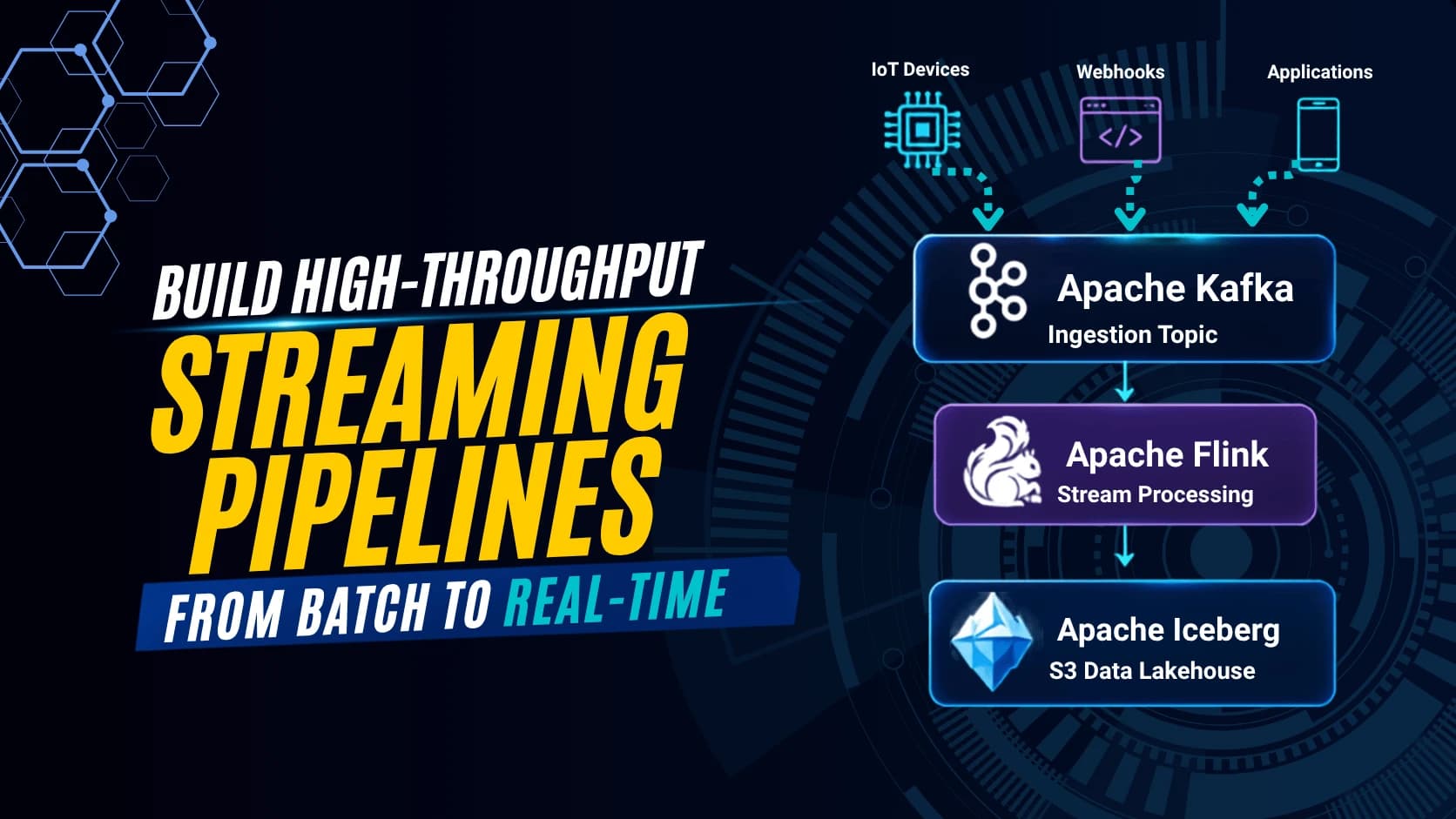
Traditional batch processing workflows (running nightly ETL cron jobs) are no longer fast enough for high-velocity businesses. When fraud detection, dynamic pricing, and real-time inventory systems require insights in sub-second intervals, relying on multi-hour batch delays creates costly operational blind spots.
High-throughput engineering teams are transitioning from traditional batch workflows to event-driven streaming pipelines.
The Evolution: Batch vs. Micro-Batch vs. Real-Time Streaming
To choose the right pipeline, engineering leads must evaluate processing semantics, latency trade-offs, and compute overhead:
Architecture | Typical Latency | Primary Compute Engine | Ideal Enterprise Use Case |
Traditional Batch | 4 to 24 Hours | Apache Spark (Batch), dbt | End-of-month financial reconciliation & static reporting |
Micro-Batch | 10 to 60 Seconds | Spark Streaming | High-volume clickstream ingestion & aggregated dashboards |
Event-Driven Streaming | 50 to 500 Milliseconds | Apache Flink, Kafka Streams | Real-time fraud detection & dynamic pricing engines |
4 Pillars of a High-Throughput Streaming Pipeline
1. Distributed Event Ingestion (The Buffer Layer)
Decouple data producers from downstream consumers using scalable distributed commit logs like Apache Kafka or Redpanda. This architecture prevents database bottlenecks during unpredictable traffic spikes.
2. Stateful Stream Processing (The Compute Layer)
Use engines like Apache Flink to execute continuous sliding and tumbling window aggregations on in-flight data streams, maintaining state accuracy across network partitions with snapshot checkpointing.
3. Unified Storage (The Open Lakehouse Format)
Eliminate dual pipelines by streaming records directly into table formats like Apache Iceberg or Delta Lake. This approach enables fast read/write speeds, ACID transactions, and in-place schema evolution over object storage (S3/GCS).
4. Schema Registry & Contracts (The Reliability Layer)
Enforce strict serialization protocols (Avro or Protocol Buffers) at the ingestion boundary. Producers cannot push payload mutations that break downstream analytic models.
Implementation Blueprint: Building an Event-Driven Stream
[IoT / Webhooks / Apps]
          │
          ▼
 [ Apache Kafka / Ingestion Topic ]
          │
          ├──> [ Apache Flink ] ──> [ Real-Time Alerts / Redis Cache ]
          │
          ▼
[ Iceberg / S3 Data Lakehouse ] ──> [ Trino / Starrocks Analytics Engine ]
Step 1: Partitioning Strategy: Partition Kafka topics based on high-cardinality keys (e.g.,
user_idortenant_id) to distribute workloads evenly across consumer worker threads.Step 2: Handle Out-of-Order Data: Configure event-time watermarking in Flink to capture delayed mobile network packets without corrupting real-time analytical windows.
Step 3: Idempotent Sink Execution: Ensure sink consumers execute upserts using deterministic primary keys to prevent duplicate records during node failovers.
Critical Engineering Gotchas to Avoid
Overusing Streaming for Static Needs: Streaming pipelines require round-the-clock monitoring and state recovery setups. If business stakeholders only inspect dashboards once per morning, stick to optimized mini-batch SQL transformations.
Ignoring Backpressure Management: When consumer processing speeds drop below producer ingestion rates, memory buffers overflow. Always monitor consumer lag metrics and auto-scale worker nodes based on queue depth.
Neglecting Schema Evolution Rules: Never allow unstructured JSON strings into streaming ingestion topics without automated compatibility checks.
Moving Forward
Real-time data analytics is not just about raw speed; it is about building reliable, self-healing data delivery pipelines. By integrating distributed logs, stateful compute engines, and modern lakehouse formats, engineering teams can turn continuous data streams into immediate operational decisions.
Written by
Praxiaskill
Last updated
17 August 2026
