
The Dark Web Explained: What It Is, How It Works, and Why You Should Care
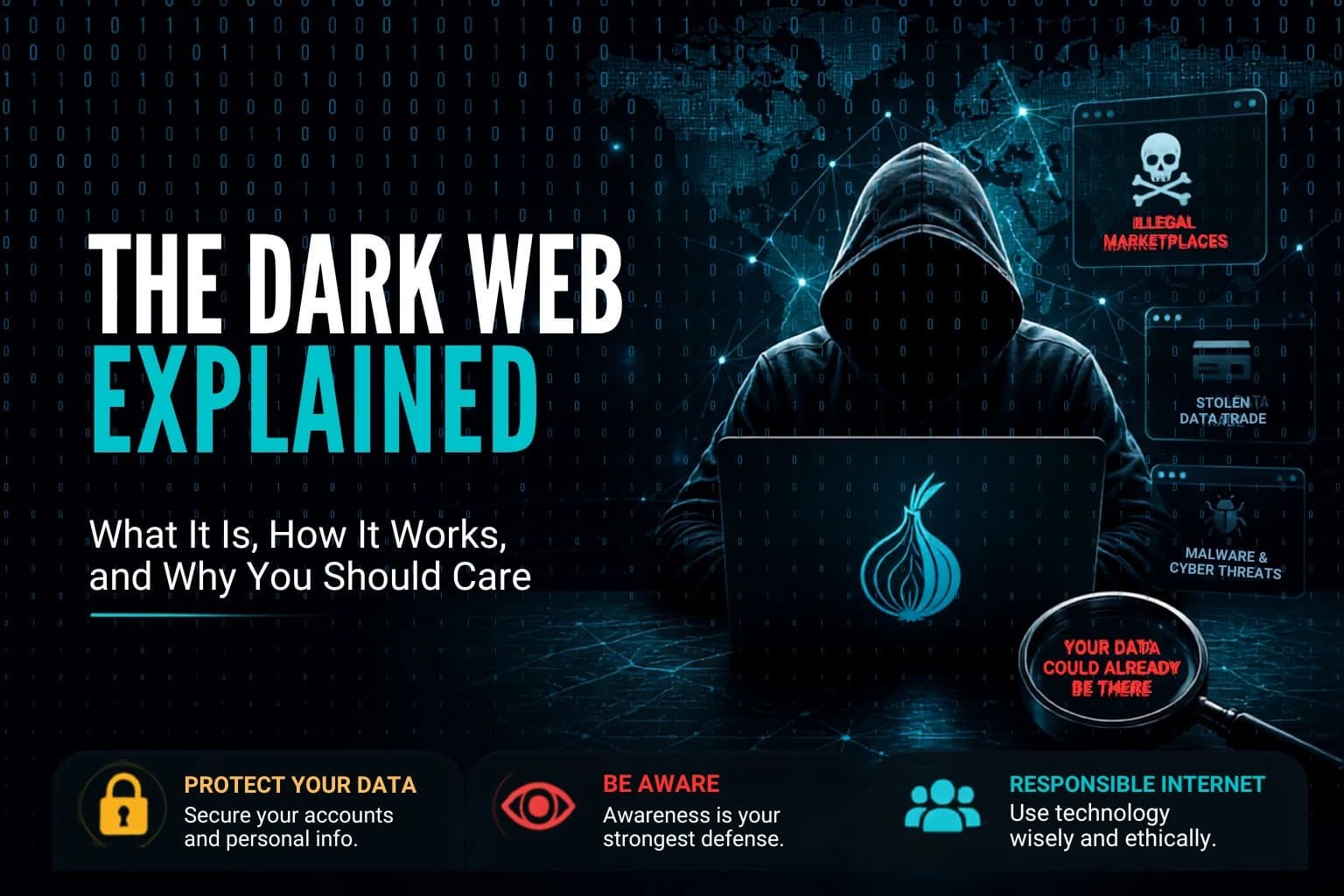
Have you ever heard someone say, "The Dark Web is where criminals hide"? It sounds like something straight out of a Hollywood thriller. Stories about hackers, stolen data, secret marketplaces, and anonymous networks often make the Dark Web seem mysterious and dangerous. While some of these stories are true, many are exaggerated or misunderstood.
The truth is, the Dark Web is only a small part of the internet, and not everything on it is illegal. It serves both legitimate and malicious purposes. Understanding what it is—and what it isn't—can help you stay informed and protect yourself from online threats.
In this guide, we'll explain the Dark Web in simple terms, how it works, why it exists, the risks involved, and what you should do to stay safe online.
What Is the Dark Web?
The Dark Web is a hidden section of the internet that cannot be accessed through traditional web browsers like Chrome, Edge, or Safari. Unlike regular websites, Dark Web sites are intentionally hidden and require specialized software, such as the Tor Browser, to access them.
Its primary purpose is to provide anonymity for both website operators and visitors. This privacy can be valuable for journalists, researchers, whistleblowers, and people living under strict censorship. However, the same anonymity also attracts cybercriminals who misuse it for illegal activities.
The Surface Web, Deep Web, and Dark Web: What's the Difference?
Understanding these three layers of the internet helps clear up many common misconceptions.
Internet Layer | Description | Accessible by Search Engines |
|---|---|---|
Surface Web | Public websites like blogs, news sites, and online stores | Yes |
Deep Web | Private content such as email accounts, banking portals, and company databases | No |
Dark Web | Hidden websites accessible only through special software like Tor | No |
A common myth is that the Deep Web and the Dark Web are the same. In reality, they are very different. Most of the internet is part of the Deep Web and is perfectly legal.
How Does the Dark Web Work?
The Dark Web relies on anonymous routing technologies that hide a user's identity and location. Instead of connecting directly to a website, your internet traffic passes through multiple encrypted servers, making it extremely difficult to trace.
Websites on the Dark Web often use the .onion domain instead of traditional domains like .com or .org. These sites are accessible only through the Tor network.
This layered routing protects user privacy but also creates an environment where illegal marketplaces and anonymous communication can exist.
Why Does the Dark Web Exist?
The Dark Web was not created for criminal activity. It was originally developed to support anonymous communication and protect user privacy.
Some legitimate uses include:
Protecting journalists communicating with confidential sources
Allowing whistleblowers to share sensitive information
Helping activists bypass internet censorship
Enabling secure communication in countries with restricted internet access
Unfortunately, these same privacy features can also be exploited by cybercriminals.
Common Risks Associated with the Dark Web
While simply learning about the Dark Web is not illegal, visiting it without understanding the risks can expose users to serious threats.
Some common dangers include:
Stolen personal information
Malware downloads
Financial scams
Fake online marketplaces
Identity theft
Cryptocurrency fraud
Illegal content
Many websites promise products or services that never arrive, making scams extremely common.
Is Accessing the Dark Web Illegal?
Accessing the Dark Web itself is legal in many countries. What matters is how you use it.
Using it for research, privacy, or education is generally lawful. However, buying illegal goods, participating in criminal activities, or downloading prohibited content can lead to severe legal consequences.
Always follow your country's laws and avoid engaging with suspicious websites or services.
How Can You Protect Yourself?
Even if you never visit the Dark Web, your personal information could still end up there after a data breach. That's why practicing good cybersecurity habits is essential.
Here are some practical tips:
Use strong, unique passwords for every account.
Enable Multi-Factor Authentication (MFA).
Keep your devices and software updated.
Avoid clicking suspicious links or downloading unknown files.
Monitor your financial accounts regularly.
Check whether your email has appeared in known data breaches.
Use trusted antivirus software and secure internet connections.
Prevention is always easier than recovering from identity theft or financial fraud.
Common Myths About the Dark Web
Myth 1: The Dark Web Is Completely Illegal
False. The technology itself is legal in many regions and has several legitimate uses.
Myth 2: Only Hackers Use the Dark Web
Researchers, journalists, privacy advocates, and human rights organizations also use it for secure communication.
Myth 3: Everything on the Dark Web Is Dangerous
Not every website hosts illegal content, but users should remain cautious because scams and malicious sites are common.
Why Should You Care?
You may never intentionally visit the Dark Web, but cybercriminals often trade stolen passwords, financial information, and personal data there after major security breaches.
Learning how the Dark Web works helps you understand why strong passwords, secure browsing habits, and online privacy matter. Awareness is one of the most effective defenses against cybercrime.
Conclusion
The Dark Web remains one of the most misunderstood parts of the internet. While it supports privacy, anonymous communication, and freedom of expression, it also presents opportunities for cybercriminals to operate in secrecy.
Rather than fearing the Dark Web, focus on understanding it. By following cybersecurity best practices, protecting your accounts, and staying informed about emerging threats, you can reduce your risk and navigate today's digital world with greater confidence.
The internet offers incredible opportunities, but staying safe starts with knowledge. The more you understand how online threats evolve, the better prepared you'll be to protect your personal information and your digital identity.
Written by
Praxiaskill
Last updated
11 August 2026
